Zangfai

About Us

Zangfai, is the first retail outlet of Assamese Traditional jewelry based in Guwahati, Assam. It is not just a shop, but an aspiration, celebration of a living tradition of gold jewelry in Assam. Lakhimi Bhuyan, is the proprietor of Zangfai. She made her foray in this field 25 years back as a beginner. In her words,'It was a very naive starting. I used to wear Assamese traditional jewelry in social functions since I had a good collection of those. My father Pranab Baruah was an artist of repute in Assam who was known for his originality as an artist. He took to design Assamese traditional jewelry by adding a fresh and contemp porary finish to the traditional style some 40 years back. But then, that was just one of his experiments with various art forms. He never thought of taking it professionally though his work was highly valued by the jewelry enthusiasts. I was Lucky to be able to wear some ornaments designed by my father. Somehow there was a revival of the trend of wearing Assamese traditional jewelry at that time. I was in fact inspired by some of my close acquaintances as they wanted me to supply them the exact pieces of jewelry I was wearing. With a bit of hesitation I took the call and now I am totally in to it.

It was an uneven journey but she has been enjoying the way by enriching herself with the association of artisans, with lives of those related to this trade and jewelry enthusiasts (her customers), as she expressed.

The shop was named as Zangfai by Padmashree Arun Sarma on her request. Zangfai is the name of an ear ornament worn by Assamese man in ancient times. Gold jewelry has always had a unique position in the social custom and cultural tradition of Assam. Gold washing and manufacture of jewelry were two important ancient industries in Assam. The river “Sobansiri” (gold in flow) was named so as gold dust was abundantly found in its sands. The earliest reference of gold in Assam is found in the Arthasastra besides other classical texts.

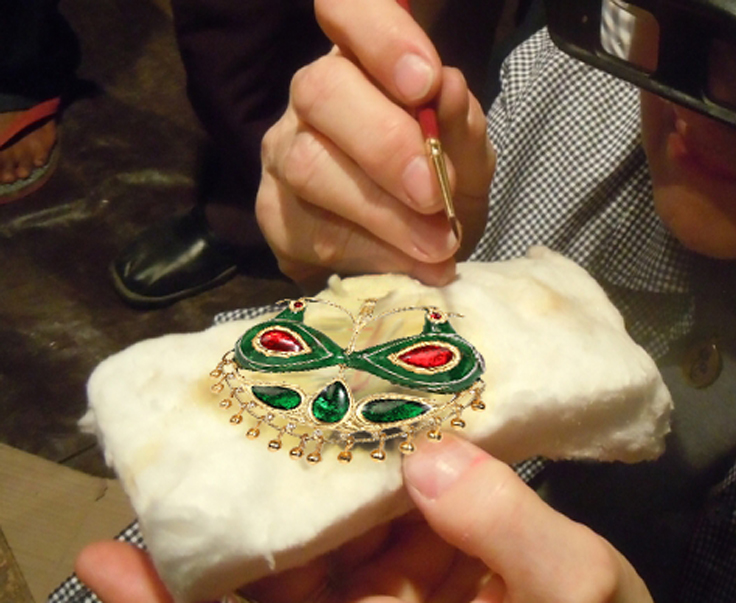
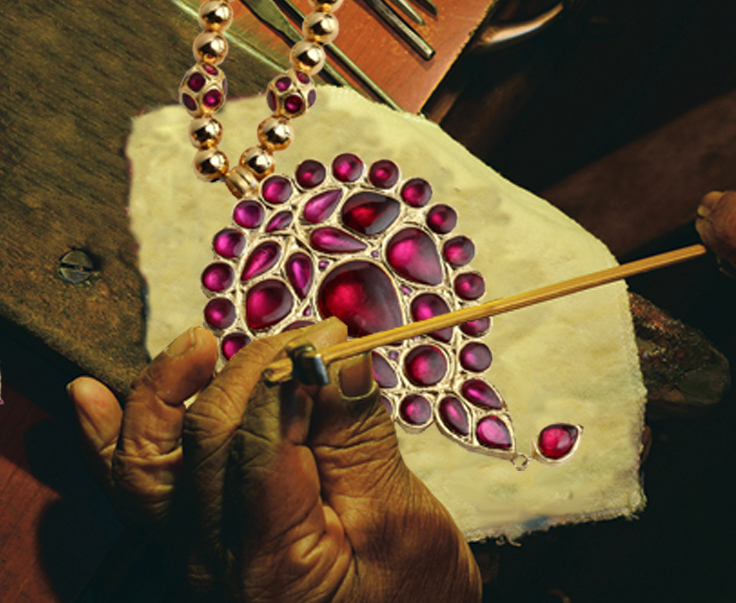
Assamese Jewelers have been using 24 carat gold to make exclusive and exquisite range of jewelries from ancient times. Later on ,till the present times, considering the affordability of jewelry loving people, irrespective of all social class, Assamese traditional jewelry is being made either on silver topping it with liquid gold or gol is plated on silver, hence there are two varieties of Assamese 'KESASON’ jewelries. The practice of Assamese traditional jewelry making is still thriving at jorhat, Nagaon and Barpeta.

maker1
maker2
maker3

It was a very naïve starting. I used to wear Assamese traditional jewelry in social function since I had a good collection of those. My father Pranab Baruah was an artist of repute in Assam who was known for his originality as an artist. He took to design Assamese traditional jewelry by adding afresh and contemporary finish to the traditional style some 40 years bock. But then, that was just one of his experiments with various art forms. He never thought of taking it professionally though his work was highly valued by the jewelry enthusiasts. I was lucky to be able to wear some ornaments designed by my father. Somehow there was a revival of the trend of wearing Assamese traditional jewelry at that time. I was in fact inspired by some of my close acquaintances as they wanted me to supply them the exact pieces of jewelry I was wearing. With a bit of hesitation I took the call and now I am totally in to it.

For the last few years,Assamese traditional look-alike ornaments have started coming from outside the State. Those are made of bronze or other inexpensive metals by copying the designs from Assamese traditional jewelry and are sold back in Assam in a cheaper rate. This is a sorry state of affair that the buyers do not have any knowledge of Assamese traditional jewelry and “KESASON”. If this selling back of cheap metals with copied Assamese design goes on, the actual Assamese traditional jewelry, its traditional artisans, their aspirations and the entire gamut of traditional values attached to it will gradually disappear from the life and culture of Assamese generations to come. Each piece of Assamese Traditional jewelry is nuanced, each piece has a story to tell, each one carries the essence of Assamese identity. This tradition is on the brink of losing its old glory. Team Zangfai, under the leadership of Lakhimi Bhuyan has been taking initiative to form an association of traders and artisans involved in Assamese traditional jewelry making trade to create a common platform for collective benefits. The team as a collective body has made an appeal to get Geographical Indication (GI) mark so that the customers can have a fair chance of buying authentic Assamese traditional jewelry made in Assam. They also plan to approach the government to declare it as an industry and for provision of financial security to the traditional jewelers who are dedicatedly involved in this artistic trade along with other demands to uplift the Assamese jewelry making enterprise and take it in its traditional form to the world community.

Hence, their first initiative is Project Gamkharu,a mission to get GI mark for Assamese traditional jewelry made in Assam. This is out of a sincere concern to preserve this beautiful tradition of Assamese identity and culture. Project Gamkharu encapsulates a golden way responding to the aspirations of small unsung artists and traders traditionally practicing gold art in Assam.

Project Gamkharu is a mission to get GI mark for Assamese traditional jewelry made in Assam. This is out of a sincere concern to preserve this beautiful tradition of Assamese identity and culture. Project Gamkharu encapsulates a golden way responding to the aspirations of small unsung artists and traders traditionally practising gold art in Assam.